

SEARCH
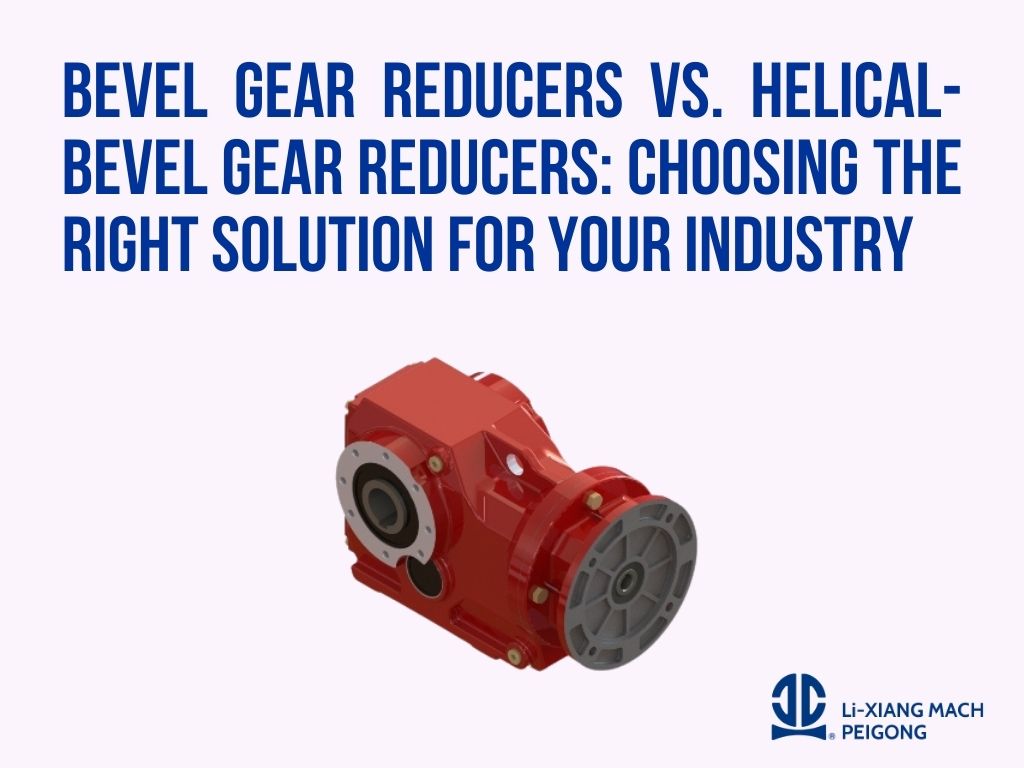
Bevel Gear Reducers vs. Helical-Bevel Gear Reducers: Choosing the Right Solution for Your Industry
Introduction
Bevel gear reducers and helical-bevel gear reducers are two of the most widely used right-angle power transmission solutions in modern industrial machinery. While both serve the purpose of changing speed and torque through angular motion, their internal geometry, performance characteristics, and ideal applications differ significantly.
For industries that rely on durability, efficiency, and smooth power transmission—such as material handling, food processing, mining, and automation—choosing the correct reducer design is essential. Understanding the differences between bevel and helical-bevel types can help engineers and equipment designers select the best solution for long-term performance and reliability.
In this article, we compare these two reducer types from a technical and application standpoint, helping you determine which option best fits your machinery requirements.
What Are Bevel Gear Reducers?
Bevel gear reducers use straight or spiral bevel gears to transmit motion between perpendicular shafts. They are known for:
- High mechanical efficiency
- Low backlash potential
- Direct, rigid power transfer
- Good performance at higher speeds
Because bevel gears rely on point or line contact geometry, they offer quick and responsive torque transfer but may produce more noise compared to helical-involved designs.
Common applications include: conveyors, mixers, industrial tools, and packaging equipment.
What Are Helical-Bevel Gear Reducers?
Helical-bevel gear reducers combine a helical gear stage with a bevel gear stage. The helical gears reduce speed smoothly before the bevel gears redirect motion at a right angle. This hybrid configuration provides several advantages:
- Increased contact ratio and smoother rotation
- Higher torque density
- Lower vibration and noise
- Greater durability under shock loads
- Excellent efficiency in both rotational directions
These features make helical-bevel reducers ideal for industries that demand precise, quiet, and long-lasting motion control.
Key Differences Between Bevel and Helical-Bevel Gear Reducers
1. Gear Geometry and Smoothness
- Bevel gear reducers: Engage more abruptly, resulting in sharper torque transitions and potentially higher noise.
- Helical-bevel reducers: Helical pre-stage ensures gradual tooth engagement for quieter, smoother performance.
2. Efficiency and Power Density
- Bevel gear reducers: High efficiency but lower power density compared to helical-bevel designs.
- Helical-bevel reducers: Higher torque transmission capability due to increased surface contact, leading to stronger torque output for compact sizes.
3. Noise and Vibration
- Bevel gears: Can generate more vibration due to straight or spiral bevel meshing.
- Helical-bevel gears: Known for low noise thanks to the helical gear stage reducing shock.
4. Durability Under Harsh Loads
- Bevel reducers: Durable but may wear faster in high-impact environments.
- Helical-bevel reducers: More resilient to shock loads, ideal for heavy-duty machinery.
5. Cost and Maintenance
- Bevel gear reducers: Often more cost-effective and easier to manufacture.
- Helical-bevel gear reducers: Higher precision and multi-stage design result in higher cost but longer operational life.
Which Industries Benefit Most from Each Type?
Bevel Gear Reducers Are Ideal For:
- Packaging machinery
- Light-to-medium-duty conveyors
- Food processing equipment
- HVAC systems
- Machinery requiring simple right-angle motion
They’re best when cost efficiency and straightforward mechanical design are priorities.
Helical-Bevel Gear Reducers Are Ideal For:
- Material handling and logistics systems
- Mining and heavy machinery
- Automotive production lines
- Industrial mixers and crushers
- High-precision automation equipment
Choose helical-bevel when smooth operation, durability, and torque density are required.
PEIGONG’s Perspective: Selecting the Right Solution
From our experience working with diverse industrial sectors, the choice between bevel and helical-bevel gear reducers typically depends on three main factors:
- Load Requirements: Heavy-duty loads benefit from helical-bevel designs.
- Noise & Vibration Constraints: Helical-bevel excels in quiet, precision environments.
- Budget & Maintenance: Bevel gear reducers offer simplicity and cost efficiency.
PEIGONG’s helical-bevel gear reducer series—such as the K-series—features:
- Zero-wear design for long operating life
- High performance across 16 models with torque ratings from 80 Nm to 50,000 Nm
- Multiple mounting configurations and shaft options
- High efficiency at various speeds and directions
For more cost-sensitive applications, bevel gear designs remain a strong and reliable choice.
FAQ: Bevel Gear Reducers vs. Helical-Bevel Gear Reducers
1. What is the main difference between a bevel gear reducer and a helical-bevel gear reducer?
The primary difference lies in the gear structure. A bevel gear reducer uses only bevel gears to transmit power at a right angle, while a helical-bevel gear reducer combines a helical gear stage with a bevel gear stage. This allows helical-bevel designs to deliver smoother operation, higher torque capacity, and lower noise.
2. Which reducer is better for heavy-duty industrial applications?
For heavy-duty or high-shock applications, helical-bevel gear reducers are generally the better choice. The helical gear stage distributes load more evenly across gear teeth, improving durability and resistance to vibration under demanding operating conditions.
3. Are bevel gear reducers still suitable for industrial use today?
Yes. Bevel gear reducers remain a reliable and cost-effective solution for many light-to-medium-duty applications where simplicity, efficiency, and compact right-angle transmission are required.
4. How do noise and vibration levels compare between the two types?
Helical-bevel gear reducers operate more quietly due to the gradual tooth engagement of helical gears. Bevel gear reducers may generate higher noise and vibration, especially at higher speeds or loads, due to more direct gear meshing.
5. Do helical-bevel gear reducers require more maintenance?
Not necessarily. While helical-bevel gear reducers have a more complex internal structure, their smoother load transmission often results in longer service life and reduced wear, which can lower maintenance frequency in long-term operation.
6. How should I choose between a bevel gear reducer and a helical-bevel gear reducer?
The decision depends on application requirements such as load level, noise limitations, operating environment, and budget. For moderate loads and simpler systems, a bevel gear reducer is often sufficient. For higher torque, continuous operation, or precision automation, a helical-bevel gear reducer is usually the better solution.
Conclusion
Both bevel gear reducers and helical-bevel gear reducers play crucial roles in industrial power transmission, but their strengths differ based on geometry, performance needs, and environmental demands.
- Choose bevel gear reducers for simpler mechanisms, lower cost, and moderate loads.
- Choose helical-bevel gear reducers for smoother operation, higher torque, and demanding industrial environments.
Understanding these differences ensures better system performance, reduced maintenance, and longer equipment life.
If you're exploring the ideal reducer for your application, PEIGONG’s technical team is ready to help evaluate your requirements and recommend the most suitable solution for your industry.